The Once a Month Volunteer: Staffing Sundays With Shorter Terms
Serving commitments are getting shorter, teams are getting older, and the tech booth has become a permanent role. What those shifts do to a small church rota, and how to build a schedule that expects them.
How the annual serving commitment gave way to the monthly slot
In many small churches, the expectation used to be simple: sign up to serve in a ministry, and you committed for a full year. Ushers, greeters, coffee teams, and nursery volunteers all rotated on a yearly basis, with a handful of breaks for holidays or summer. This model made it easy to plan, and a full roster could be pinned to the bulletin board every August.
But over the last decade, the ground has shifted. Fewer people are willing or able to sign up for twelve months in a row. Many churches now fill their volunteer slots one month at a time. Instead of asking someone to serve every Sunday for a season, coordinators offer "once a month" or "third Sunday" schedules. This fits the realities of today's families: changing work hours, travel, and the competing demands of school and sports.
Shorter commitments reduce the risk of burnout and make it easier for newcomers to dip a toe into service. At the same time, the churn is higher. A children's ministry leader who used to see the same faces year after year now spends more time onboarding, reminding, and hunting for subs. The monthly slot makes scheduling more flexible, but it also makes consistency a bigger challenge.
Keep reading: New Volunteer Onboarding Checklist: Application to First Sunday
Aging volunteer teams and the succession problem in every ministry
Another trend facing small churches is the aging of core volunteer teams. Many ministries depend on members who have faithfully served for decades. As these key volunteers retire or cut back, finding replacements is rarely straightforward. Fewer younger adults are stepping into leadership or regular serving roles.
This shift creates succession gaps, particularly in specialized areas. The treasurer, the communion preparer, or the Sunday school superintendent may have built up years of know-how. When they step down, the handoff is not always smooth. Some ministries risk lapsing if a replacement is not found in time.
Volunteer coordinators have responded by breaking down roles into more manageable pieces. Instead of a single person handling a task for an entire year, the job is split among several people serving for shorter periods. This approach can help with recruitment, but it does mean more coordination and more frequent training.
Many small churches are also encouraging ministry "shadowing." Newer or younger volunteers serve alongside veterans for a few months, learning the ropes before taking over. But with shorter and less predictable attendance patterns, finding those handoff windows is not always easy.
The livestream and sound booth as a permanently staffed position
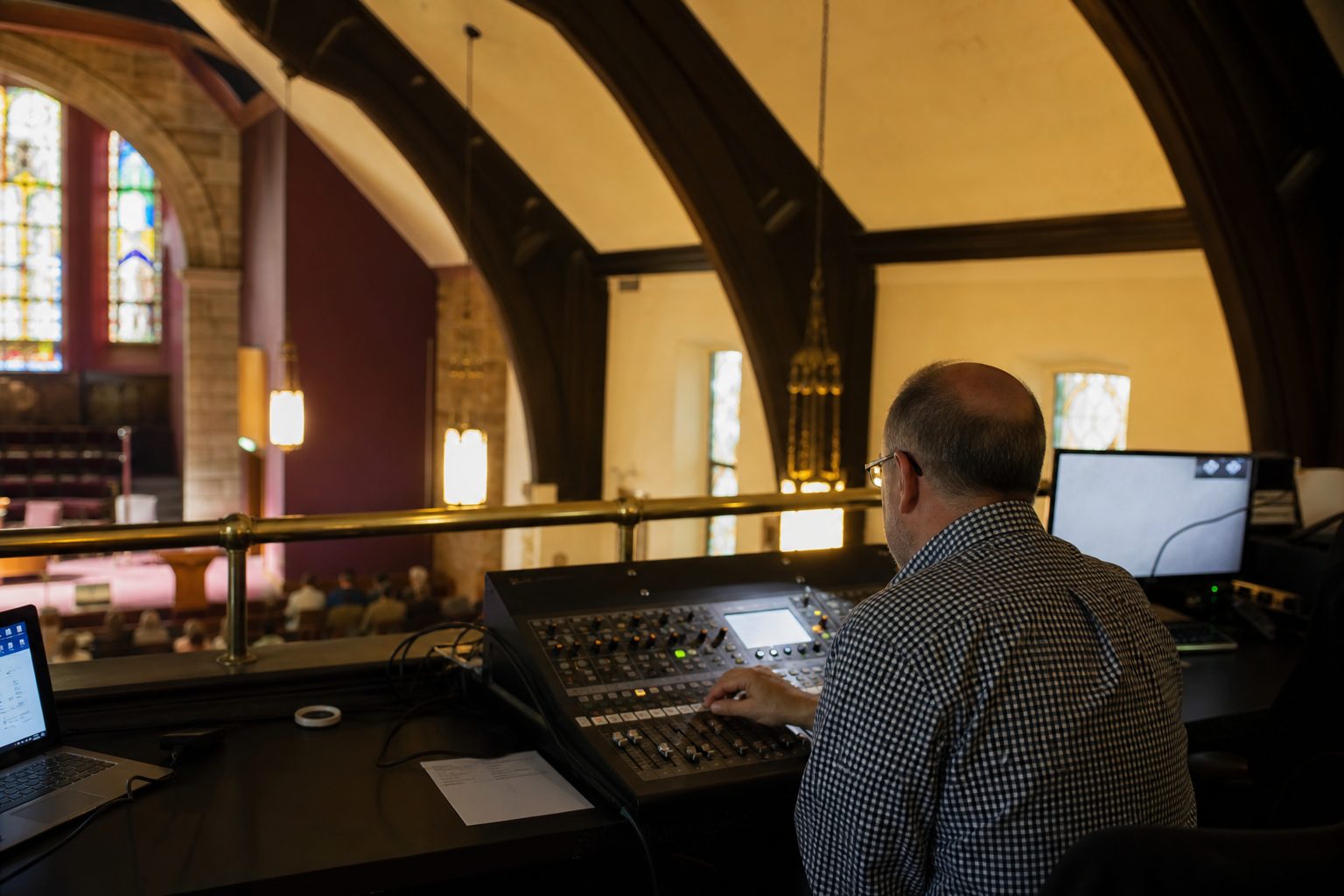
Ten years ago, the sound booth was a role filled when possible, often by a tech-savvy teen or an audio enthusiast. Today, the booth is integral. With the rise of livestreaming, every service needs someone to run sound, slides, and stream controls. Churches of all sizes now treat this as a non-negotiable position, week in and week out.
The skill set is more technical than ever. Volunteers need to troubleshoot microphones, balance audio, and switch camera feeds. When the regular "tech person" is on vacation, finding a backup can be stressful. Many churches have trained a small pool of volunteers, but the complexity of the task limits how wide that pool can be.
Some churches try to schedule "teams" for the booth, pairing a lead with an assistant. This both trains new people and provides redundancy. But with so many ministries vying for a shrinking volunteer base, the tech booth is often filled by the same handful of people, leading to fatigue.
The need for reliable livestream coverage is not going away. For those who cannot attend in person, especially older members or those with health concerns, the stream is their link to worship. This raises the pressure on coordinators to ensure this role is never left empty.
Keep reading: How Many Volunteers a 150 Seat Sunday Actually Needs
Two service and hybrid schedules in buildings that once ran one service
Before 2020, most small churches ran a single Sunday morning service. Volunteer scheduling was a straightforward affair: one set of greeters, one usher team, one children's ministry slot. Now, many churches offer two services to allow for social distancing or to accommodate more people. Others run a hybrid model, with one in-person service and one online.
This change doubles or even triples the number of volunteer slots. A church that used to need three greeters now needs six. The nursery may need two teams per Sunday instead of one. Scheduling has become more complex, with some volunteers serving at both services and others picking one or the other.
Hybrid schedules add another layer. Someone needs to run the livestream for the early service, then reset for the late service. Coffee teams may cover both services or just one. When the same volunteers cover multiple slots, fatigue becomes a concern.
The move to two services has also made flexibility more important. Volunteers may prefer to serve at the service they attend, or they may want to switch weeks based on family schedule. Coordinators need to track not just who is serving, but when and where.
Families who attend twice a month and what that does to coverage
Attendance patterns are another piece of the puzzle. Many families now attend church two or three times a month, rather than every Sunday. Sports, travel, and work shifts all play a part. This isn't just a post-pandemic trend. It has been building for years in most communities.
For volunteer scheduling, this means a smaller and less predictable pool on any given Sunday. A family that signed up to serve the first Sunday may be out of town for a tournament. The family who used to anchor the late service might only be available every other month. Reminders and follow-ups become critical.
Some churches have responded by allowing volunteers to sign up for slots as they know their schedule. Others maintain a master rota and ask volunteers to find their own substitutes if they cannot serve. Both approaches have pros and cons. Self-service swaps reduce the burden on coordinators but require a motivated volunteer base.
This shift also changes the culture of service. Instead of the same team every week, there is more mixing. Newer members get to know a wider group, but the sense of "ownership" in a ministry can be diluted. Leaders need to find ways to build community within more fluid teams.
See how PewRoster handles this for faith communities
Designing a rota that assumes a wide but shallow volunteer pool
Given all these shifts, the modern church rota looks different than it did even five years ago. Instead of a deep roster of weekly regulars, most churches now depend on a broad list of occasional volunteers. The challenge is to match availability to need, with as little back-and-forth as possible.
Strategies for spreading the load
One approach is to divide each role into the smallest possible commitment. Instead of asking for a year as a Sunday school teacher, coordinators ask for a single month or even a set of two Sundays each quarter. For jobs like coffee prep or ushering, a sign-up sheet rotates weekly. This lets more people participate with less pressure.
Many churches are also encouraging cross-training. A volunteer who serves in the nursery one month might try greeting the next. This keeps teams flexible and allows for coverage when someone cancels. It also prevents any one person from feeling locked in.
Communication and reminders
With more people serving less often, clear communication is vital. Automated reminders by email or text help reduce no-shows. Some churches print the rota in the bulletin or post it online, but these methods can lag behind last-minute swaps.
Self-service swap systems are becoming more common. These allow volunteers to trade dates without going through the coordinator. While this reduces the coordinator's workload, it does require the system to be up to date and easy to use. A forgotten swap can still leave a gap on Sunday morning.
Tracking and follow up
Tracking who has served and who is due for a break helps prevent burnout. Some coordinators keep spreadsheets, while others use dedicated tools. The key is to have a system where everyone can check their assignments and report changes quickly.
Feedback loops also matter. Brief check-ins after a serving term help spot issues early. If a role is consistently hard to fill, it may be time to adjust expectations or redesign the task.
What to watch in small church staffing over the next few years
Looking ahead, several trends are likely to shape volunteer scheduling for small churches. The push for shorter, more flexible commitments will continue. As more volunteers ask for manageable time slots, coordinators will need tools that adapt in real time.
The need for technical volunteers will not shrink. As livestreams and hybrid gatherings become a permanent fixture, every church will need a trained team for sound and video. Regular training and shadowing will be essential to prevent burnout in these high-pressure roles.
Demographic shifts will press the issue of succession planning. With core teams aging and fewer young adults stepping in, churches must look for new ways to recruit and onboard volunteers. Building community within serving teams can help, but it will require creativity and persistence.
Finally, the challenge of variable attendance will remain. Tools that allow volunteers to update their availability, swap dates, and receive reminders will be key. As the rota becomes more dynamic, systems that handle changes smoothly will free up leaders to focus on ministry instead of paperwork.
Volunteer scheduling tools that support self-serve swaps, automated reminders, and live updates are already helping many churches manage these changes. As teams grow wider and commitments get shorter, having a reliable system in place makes all the difference.
Read also
New Volunteer Onboarding Checklist: Application to First Sunday
Every step from the moment somebody says yes to their first solo shift: the application, references, screening, the six month rule, a signed policy, a shadow Sunday and the calendar entry that closes it out.
How Many Volunteers a 150 Seat Sunday Actually Needs
Slot count times rotation depth, plus a bench. The arithmetic behind a covered Sunday, using published child to adult ratios, the two adult rule, and what a once a month commitment does to roster size.
A Sunday at the Check In Desk: Where the Morning Breaks
Forty minutes at a children's check in station on a two service Sunday: the label printer jam, the parent without a code, the volunteer who did not show, and the small fixes that kept the line moving.