A Sunday at the Check In Desk: Where the Morning Breaks
Forty minutes at a children's check in station on a two service Sunday: the label printer jam, the parent without a code, the volunteer who did not show, and the small fixes that kept the line moving.
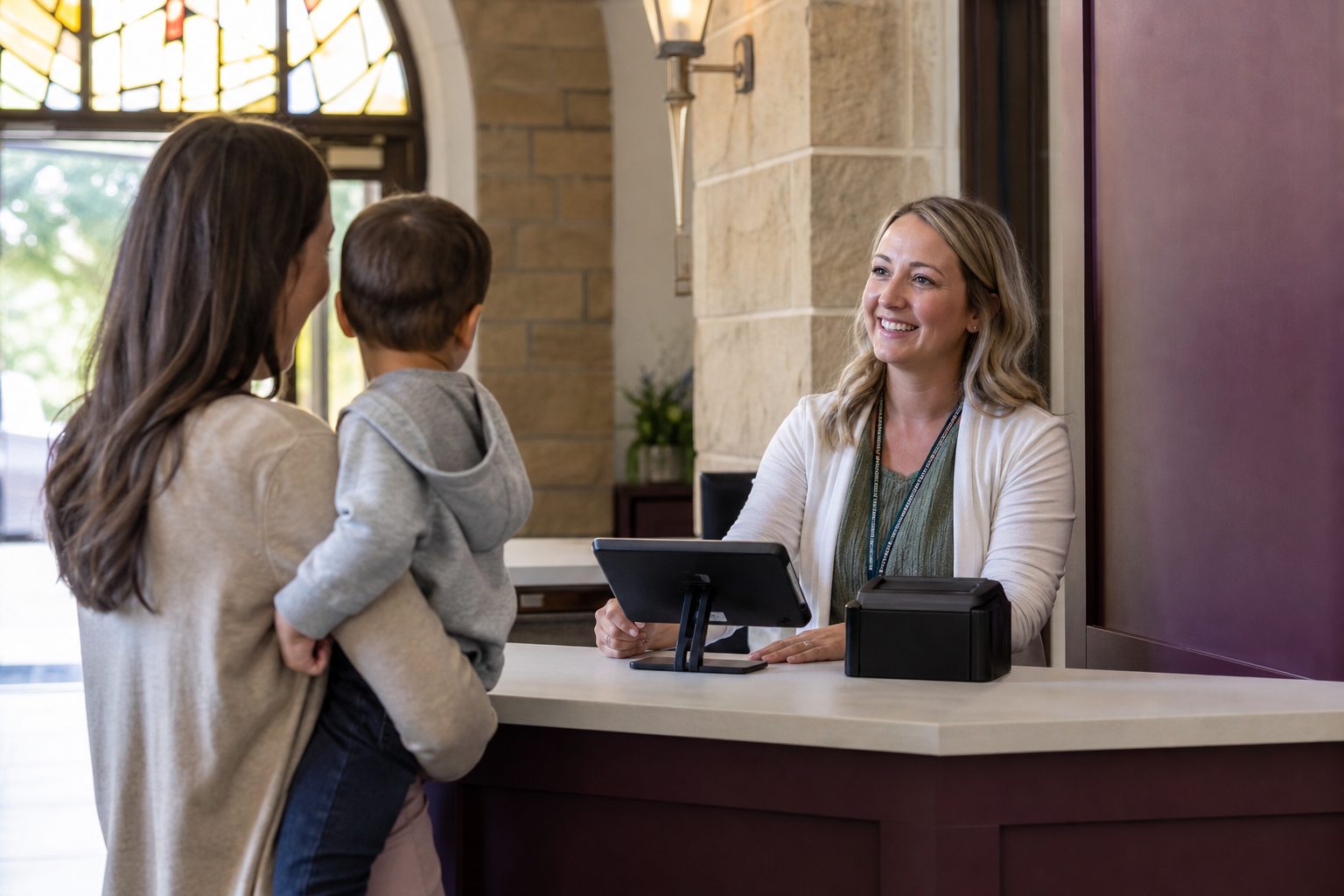
Setting up the station before the first family arrives
The church is quiet at 7:55 a.m., but the check-in desk is already humming with purpose. Two folding tables create a U-shape just outside the children's wing. On top: clipboards, a compact label printer, stacks of preprinted name tags for the nursery, and a small bin of pens. The laptop boots slowly, its familiar hum blending with the vacuum in the fellowship hall. The station lead, a volunteer with five years' experience, checks the roster for assigned crew. One signed up weeks ago, the other confirmed in a text the night before.
The first order of business is plugging in the label printer, running a test print, and making sure the right paper stock is loaded. Spare rolls sit close by, but nobody wants a changeover mid-rush. A quick scan of the check-in system shows the volunteer list is accurate. Lanyards with "Check-in Team" badges go on hooks. The hand sanitizer bottle is topped off. Walkie talkies, one for the check-in crew and one for the children's wing lead, are tested for battery life and volume.
The doors open at 8:15. The station is ready: screen on, supplies at hand, and a carefully rehearsed sense of calm before the morning unfolds.
Keep reading: How to Build a Six Week Serving Rota for a Small Church
The first rush and the exact point where the line stalls
The first families arrive in gentle pairs, but by 8:35 the line has formed. Each parent needs to check in children, print name tags, and collect security tags. A well-practiced rhythm develops: greet, search the last name, print, hand off. Most families are regulars, so their names autofill and the process takes less than thirty seconds per child.
The stall comes when a parent forgets their check-in code or types a nickname that the system does not recognize. The line slows. Children tug their parents' sleeves and crayons scatter on the floor. The volunteer at the computer tries alternate spellings or scrolls through the directory, asking the parent to clarify which service they usually attend. Each lost minute ripples down the line, as the foyer grows noisy and a few parents glance at their watches, anxious not to miss the opening song.
For a brief moment, two children from different families share the same first name and last initial, prompting a double check of birth dates. The stall is subtle, but it is always at this intersection of system and human memory that the line thickens, testing the patience of both parents and volunteers.
Label printers, name tags and the paper backup nobody wants to use
The label printer is the heartbeat of the check-in desk. When it works, the process is nearly invisible. This Sunday, at 9:08, it jams. A thin strip of adhesive label sticks out at an odd angle. The volunteer tries the usual fix: open the lid, remove the half-printed tag, and reload. It takes three tries before the feed is smooth again, and the next family's tags print perfectly.
But for four minutes, the backup plan is in play. The team grabs the paper sign-in sheet and a stack of blank name tags from the drawer below. Parents write children's names in block letters, and volunteers copy them onto sticky name tags with a permanent marker. It works, but the process is slower, and handwriting varies. The security tag system is harder to replicate on paper, so a volunteer initials the pickup slip and matches it to the child's handwritten name tag.
As soon as the printer recovers, the team switches back, but the paper backup lingers in memory as a reminder: even a well-oiled process needs old-fashioned redundancy, no matter how much everyone wants to avoid it.
Keep reading: Paid Nursery Worker or Volunteer Rota: Cost, Payroll, Risk
The family that is not in the system yet
Halfway through the first service, a new family arrives: two parents, a baby in a carrier, and a preschooler clinging to mom's hand. They have not preregistered and do not know their way around the check-in system. The desk volunteer welcomes them, offers a clipboard, and guides them through the form, names, birth dates, allergies, emergency contacts. The process is friendly, but it takes time.
While the parents fill out the form, the line grows again. The volunteer keys in the new data, double-checks spelling, and prints fresh tags. The preschooler's name is unusual, prompting a careful letter-by-letter confirmation. The volunteer explains the pickup procedure and hands over the security tag, making sure the parents know they will need it at the end of the service.
The delay is only five minutes, but it feels longer to those in line. For the new family, though, this is their first impression of the church's care for children. The volunteer's patience and thoroughness matter more than the speed of the process.
Covering a no show volunteer in the middle of a service
The first service ends and the second begins. The check-in team was scheduled for two, but one volunteer has not arrived. A quick scan of the team text thread shows no message, and the backup has not answered their phone. The station lead decides to cover both the computer and the handoff of security tags.
There is a brief scramble to stretch the remaining team. A youth group helper is pulled in for crowd control, keeping siblings entertained and the foyer clear. The station lead runs both the check-in software and the name tag handoff, moving back and forth between the laptop and the door. The process slows, but families keep moving. The walkie talkie comes in handy for alerting the children's wing that the check-in desk is short staffed, so extra care is taken during pickups.
The missing volunteer's absence is felt most during the peak arrival window for the second service, when two pairs of hands are really needed. By 11:10, the rush is over, and the lead can finally catch their breath. The need for more reliable backup and better real-time coverage is clear.
See how PewRoster handles this for faith communities
The security tag handoff at pickup and the exception that tests it
As the second service wraps up, parents line up to retrieve their children. The system is designed for safety: each child's name tag is matched to a parent's security tag. Most pickups go smoothly. The volunteer checks the code, matches it to the tag, and releases the child. The handoff is quick, but careful.
But one parent has lost their tag. They search pockets, check the diaper bag, but it is gone. The volunteer follows protocol: ask for photo ID, cross-check with the check-in record, and call the children's wing lead for verification. The process takes extra time, and the parent grows anxious. The line behind them waits. After confirming the parent's identity, the volunteer initials the paper log and releases the child, making a note to review the procedure later.
This exception highlights why the process is strict: safety is the priority. The system relies on both the technology and the attention of the volunteers. Each exception is a stress test for the routine, reminding the team why every piece of the process matters.
What the coordinator changed before the following Sunday
The next week, several changes go into effect. The coordinator reviews where the line stalled and tweaks the greeting script to clarify last name spelling and code retrieval up front. A second label printer is tested and set up as backup, cutting down the time lost to jams or malfunctions. The paper sign-in is moved to a more accessible spot, with clearer instructions for use if needed.
The volunteer roster is revised, with more overlap during the ten-minute rush between services. The coordinator adds a last-minute signup option for a youth helper to cover no shows and crowd control. The new family registration form is updated for clarity, and a volunteer is assigned to greet first-time visitors during the busiest window so the regular line does not back up.
Finally, the coordinator tests out a volunteer rota scheduling tool that allows team members to swap shifts on their own, mark their availability, and get reminders. The hope is that by making the schedule more self-serve, and less reliant on last-minute texts, the check-in desk will be better covered and the service smoother for both families and volunteers.
For small churches, these adjustments can make Sunday mornings more welcoming and less stressful. When volunteer scheduling, shift swaps, and communication are handled by a tool built for church teams, the check-in process runs more smoothly, so families experience care and safety right from the first greeting.
Read also
How to Build a Six Week Serving Rota for a Small Church
A repeatable method for filling nursery, greeter, sound and communion slots six Sundays out, with swap deadlines volunteers understand and a bench deep enough to survive flu season.

Paid Nursery Worker or Volunteer Rota: Cost, Payroll, Risk
Two ways to keep the nursery covered every Sunday. One brings payroll, wage rules and workers compensation. The other brings recruiting, screening and the risk of an empty room at nine o'clock.
Seven Rota Mistakes That Burn Out Church Volunteers
The same twelve people serve every week, the schedule lands on Friday night, and nobody knows who covers the door. These are the scheduling habits that quietly empty a serving team, plus the fix for each.