Background Checks and Mandated Reporting for Church Volunteers
What law actually requires before a volunteer works with children, how the National Child Protection Act opens state and FBI records to nonprofits, and where mandated reporter duties begin for church staff.

Where the duty comes from: state statutes, not one federal rule
Churches face a patchwork of state laws when it comes to volunteer background checks. There is no single federal regulation that spells out requirements for every faith community. Instead, each state legislature sets its own standards for screening volunteers, especially those working with minors.
Most states require background checks for volunteers who have direct or regular contact with children, but the exact roles and situations covered can differ. One state may mandate checks for anyone supervising youth activities, while another might only require them for paid staff. In some places, the law is silent on faith-based organizations, but insurers or denominational authorities fill the gap with their own policies.
It is not enough to assume that what works for a public school or daycare applies to churches. While the intent is similar, protecting children, faith communities must review their state's statutes and consult legal counsel to ensure compliance. For example, Pennsylvania and Texas have comprehensive laws requiring checks on many volunteers, while others only suggest best practices.
Keep reading: Rebuilding a Children's Ministry Rota After Half the Team Left
The National Child Protection Act and nonprofit access to criminal records
The National Child Protection Act made it possible for nonprofits, including churches, to request background checks using state and FBI criminal databases. However, the Act does not force any group to run checks. Instead, it creates a legal pathway for access, allowing states to decide their own procedures and eligibility criteria.
In practice, a church administrator seeking a national background check must apply through their state's designated agency, often the state police or a child protection service. Some states require fingerprinting to use the FBI database, while others allow name-based checks for nonprofit volunteers. State-level records are usually faster and less expensive than those that include federal data, but only show crimes prosecuted in that state.
Churches should be aware that access does not guarantee clarity. Record quality, completeness, and response time vary by state. A national search may return old or minor offenses, mismatched names, or sealed records that cannot be considered in hiring decisions. Training and clear policies help staff interpret results appropriately and avoid unfair exclusion of qualified volunteers.
Fingerprint based checks compared with name based database searches
When screening volunteers, administrators often choose between two main types of checks: fingerprint-based searches and name-based database queries. Fingerprint checks are the gold standard for accuracy. They match an individual's prints to official arrest and conviction records kept by state or federal authorities. Name-based searches rely on personal identifiers, such as name and date of birth, to scan commercial or government databases.
Fingerprint checks are less likely to miss criminal records caused by name changes, typos, or aliases. They also reduce the risk of "false positives," where someone with a similar name is wrongly flagged. However, these checks usually cost more, take longer, and may require volunteers to travel to a fingerprinting site. Many churches find the process burdensome for occasional or one-off helpers.
Name-based checks are faster and easier to run, often producing results in hours rather than days. They allow small churches to screen many volunteers quickly. The downside is that common names or misspellings can lead to incomplete or inaccurate results. Some states only accept fingerprint-based checks for sensitive roles, while others leave the choice up to the church or its insurer.
Keep reading: The Once a Month Volunteer: Staffing Sundays With Shorter Terms
Clergy and volunteer mandated reporter status, and how states differ
All states require certain professionals to report suspected child abuse or neglect. The list of "mandated reporters" typically includes teachers, doctors, and sometimes clergy. Some states specifically name volunteers in youth-serving organizations, while others leave the obligation with paid staff or clergy alone.
In many states, clergy are legally required to report abuse, but the details matter. For example, in California and Illinois, both clergy and lay volunteers may be mandated reporters if they supervise children as part of their church duties. Other states, like Florida, impose the duty broadly, making almost any adult who suspects abuse a mandated reporter, regardless of their role.
Failing to report can lead to civil or criminal liability. Churches must train staff and volunteers on what counts as "reasonable suspicion," how to file a report, and where to send it. Many insurance carriers require proof of this training before renewing coverage.
What clergy penitent privilege does and does not shield
Clergy-penitent privilege protects confidential communications between clergy and members of their congregation. This privilege can limit when a minister, priest, or pastor must disclose information learned during spiritual counseling, confession, or similar settings. However, the protection is not absolute.
Most states have laws that recognize clergy-penitent privilege, but the scope varies. In some states, clergy must report child abuse even if they learn about it during a confession or counseling session. Other states allow clergy to keep such information confidential, but only if the communication was truly private and religious in nature. Casual conversation or information shared outside a formal counseling context is usually not protected.
Church leaders should consult state law and denominational guidance to understand when privilege applies. Many states require clergy to inform church members about the limits of confidentiality before a conversation begins, especially when it involves potential harm to children.
See how PewRoster handles this for faith communities
The written child protection policy that insurers and courts look for
Insurers and courts expect churches to have a written child protection policy. This policy sets clear expectations for screening, supervision, and reporting. It also shows that the church takes child safety seriously, which can reduce liability and aid in defending against lawsuits.
A strong policy covers who gets screened, how often, and what types of checks are acceptable. It spells out supervision ratios, drop-off and pick-up procedures, discipline guidelines, and steps to take if abuse is suspected. Many insurers require a copy of this policy as a condition for coverage.
Courts look at whether the church followed its own rules when something goes wrong. Gaps between policy and practice can undermine a legal defense. Administrators should review the policy annually, train all staff and volunteers, and document compliance. Templates from denominational offices or national child safety groups can serve as starting points, but policies must reflect the realities of each local church.
Rescreening intervals, record retention and who may see results
Screening volunteers is not a one-time event. Most churches rescreen staff and volunteers at set intervals, such as every one to three years. Some states or insurers specify the frequency. Regular rescreening helps catch offenses that may have occurred after the initial check and signals an ongoing commitment to safety.
Record retention is another key compliance issue. Churches need to keep documentation that checks were performed, but must also protect sensitive personal information. Good practice is to retain only what is needed to show compliance: a confirmation of the check, the date, and who reviewed the results. The actual report, especially if it contains criminal data, should be stored securely and accessed only by those with a legitimate need to know, such as the pastor or personnel committee.
Volunteers should be told who will see their results and what will happen if something is flagged. Destroying records too soon can make it harder to prove compliance after an incident. Keeping them too long raises privacy risks and can violate state data retention laws.
Consent, adverse action and FCRA duties when you use a screening vendor
When a church uses an outside vendor to run background checks, the process is covered by the Fair Credit Reporting Act (FCRA). This law sets rules for how background information is collected, disclosed, and used in volunteer decisions.
FCRA requires written consent from the volunteer before the check is run. The authorization form must be clear and separate from other paperwork. If the check reveals information that could disqualify the volunteer, the church must follow "adverse action" procedures: provide a copy of the report, explain the volunteer's rights, and offer a chance to dispute or correct any errors before making a final decision.
Vendors must provide a "summary of rights" along with the report. Churches should keep copies of consent forms and adverse action notices to show compliance in case of a dispute. Using a reputable vendor helps ensure that reports are accurate, up to date, and legally obtained.
When volunteers schedule themselves for roles, as with modern rota tools, administrators must still ensure that checks are up to date before a volunteer serves. Automated scheduling systems can help track who is cleared for duty and prompt renewal when rescreening is due.
Read also
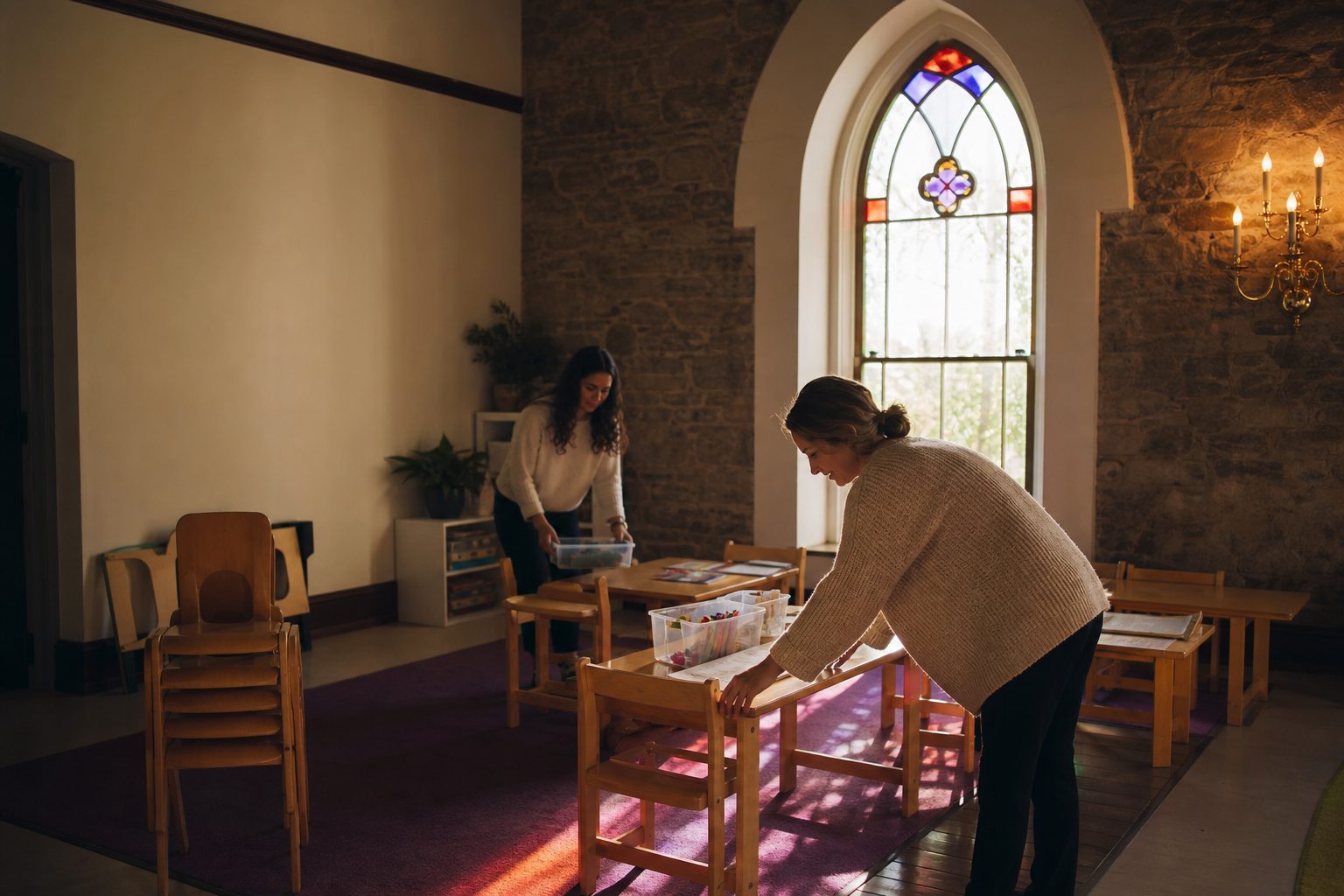
Rebuilding a Children's Ministry Rota After Half the Team Left
One small congregation lost most of its Sunday school team in a single spring. This is the sequence that rebuilt the roster: fewer rooms, written role descriptions, a screening cohort and a real end date.
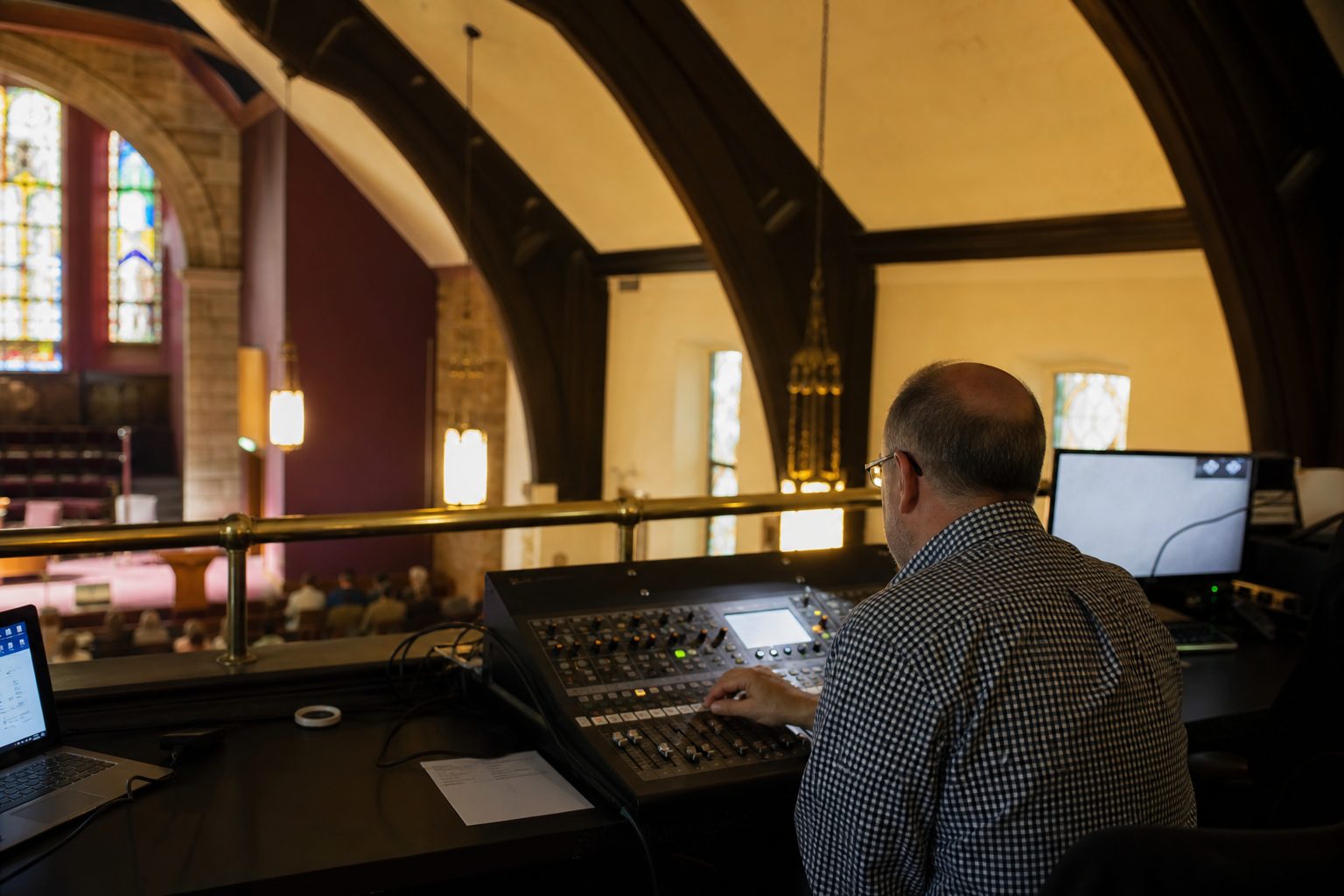
The Once a Month Volunteer: Staffing Sundays With Shorter Terms
Serving commitments are getting shorter, teams are getting older, and the tech booth has become a permanent role. What those shifts do to a small church rota, and how to build a schedule that expects them.
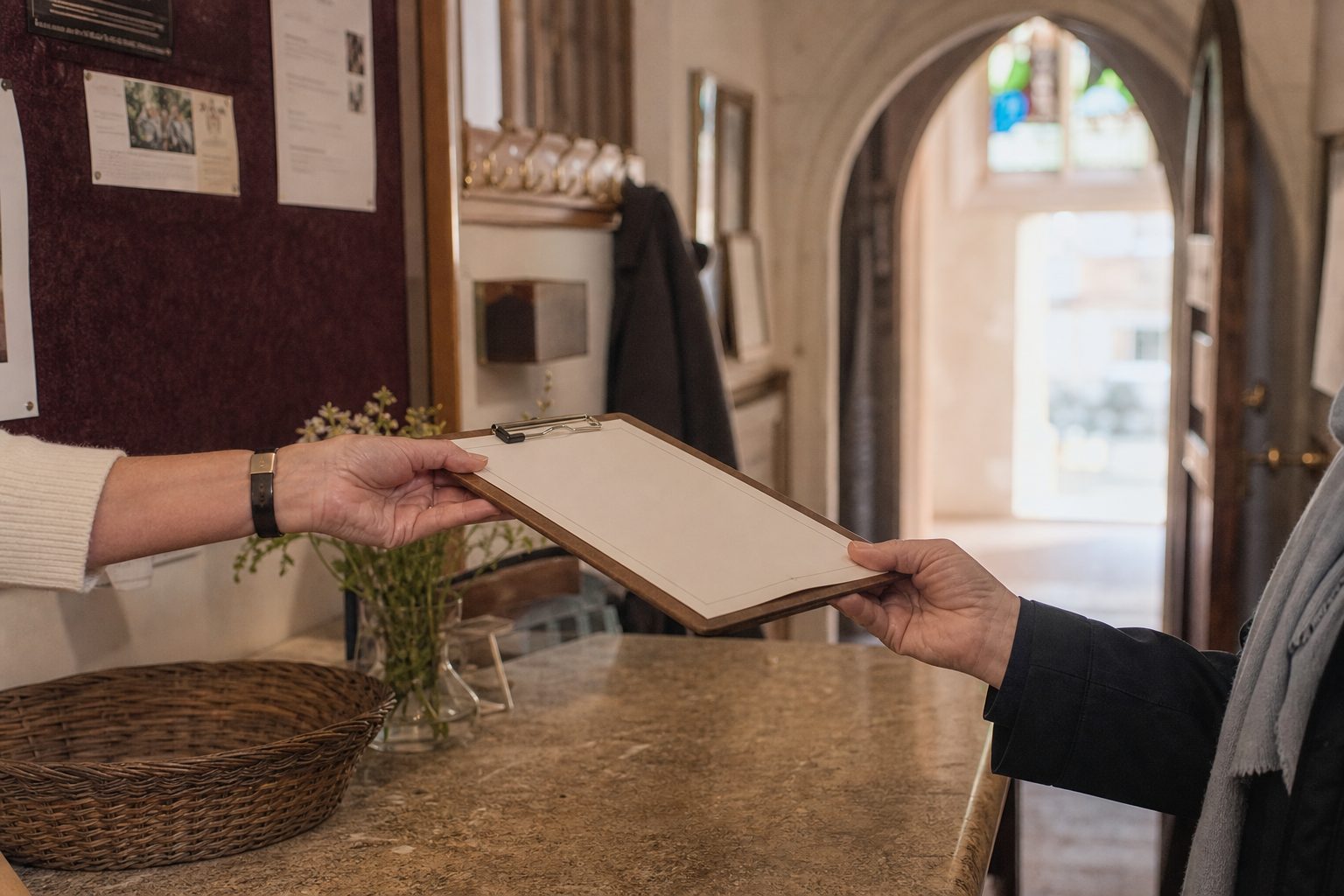
New Volunteer Onboarding Checklist: Application to First Sunday
Every step from the moment somebody says yes to their first solo shift: the application, references, screening, the six month rule, a signed policy, a shadow Sunday and the calendar entry that closes it out.